Road Condition Sensor
Renke is engaged in industrial sensor, communication gateway, industrial data platform, cloud computing service,and measurement control technology solution. We have won good reputation for high quality products and sincere service. Renke insists on the policy that"technology first, exquisite design, customer satisfied" we are careful with every detail. Every drawing has to be considered and revised repeatedly. Every products is the thought of designer. https://renkeer.en.alibaba.com/?spm=a2700.shop_cp.88.13.b4f23299jnwkoA
Pavement sensors play a vital role in intelligent transportation. They use various technical means to monitor and analyze road conditions in real time, provide decision-making support for traffic management departments, and help drivers take countermeasures in advance to reduce the risk of traffic accidents. The following is a detailed analysis of the role of pavement sensors in intelligent transportation:
Basic principles and application areas of pavement sensors
Pavement sensors mainly use spectral analysis or microwave remote sensing technology to accurately measure pavement parameters. These sensors can monitor pavement conditions in real time, including parameters such as pavement temperature, water film height, ice thickness, snow thickness, freezing point temperature, ice content, salt content and friction coefficient, as well as parameters such as pavement flatness, texture, cracks, etc.
Specific functions of pavement sensors
Traffic flow monitoring: Sensors can monitor the number and speed of vehicles and pedestrians in real time and provide accurate traffic flow data.
Vehicle positioning and tracking: GPS positioning sensors can obtain vehicle location information in real time, and inertial navigation sensors can detect the movement status of vehicles.
Traffic safety warning: Prevent traffic accidents by monitoring the speed and distance of vehicles and pedestrians in real time.
Traffic signal control: Automatically adjust the timing of traffic signals according to changes in traffic flow to optimize traffic flow.
Traffic environment monitoring: Monitor road conditions, such as water accumulation, ice, cracks, etc., and issue warnings in time to ensure traffic safety and smooth roads.
Types and characteristics of road surface sensors
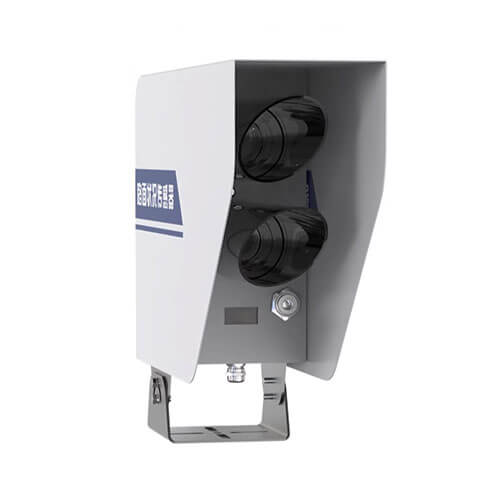
Road surface condition sensors are mainly divided into telemetry and embedded types. Telemetry sensors are based on optical principles and detect road surface conditions in real time by comparing the spectral information of dry roads and covered roads. The embedded sensors integrate a variety of measuring probes and directly contact the road surface for measurement. These sensors have the characteristics of simple structure, good stability, high reliability, and low energy consumption.
Integration and future development of road surface sensors in intelligent transportation systems
Road surface sensors can be combined with intelligent traffic management systems to achieve real-time monitoring and early warning of road conditions. With the development of technologies such as the Internet of Things, big data, and artificial intelligence, sensor technology will become more intelligent, digital, and networked. In the future, sensors will be more miniaturized, integrated, and multifunctional, able to achieve the fusion and processing of multiple information, and the accuracy and stability of sensors will be further improved.
In summary, the application of road sensors in intelligent transportation not only improves the efficiency and safety of traffic management, but also provides important information support for drivers, which helps to build a more intelligent, efficient and safe urban traffic environment.


