Application of soil water potential sensor
Renke is engaged in industrial sensor, communication gateway, industrial data platform, cloud computing service,and measurement control technology solution. We have won good reputation for high quality products and sincere service. Renke insists on the policy that"technology first, exquisite design, customer satisfied" we are careful with every detail. Every drawing has to be considered and revised repeatedly. Every products is the thought of designer. https://renkeer.en.alibaba.com/?spm=a2700.shop_cp.88.13.b4f23299jnwkoA
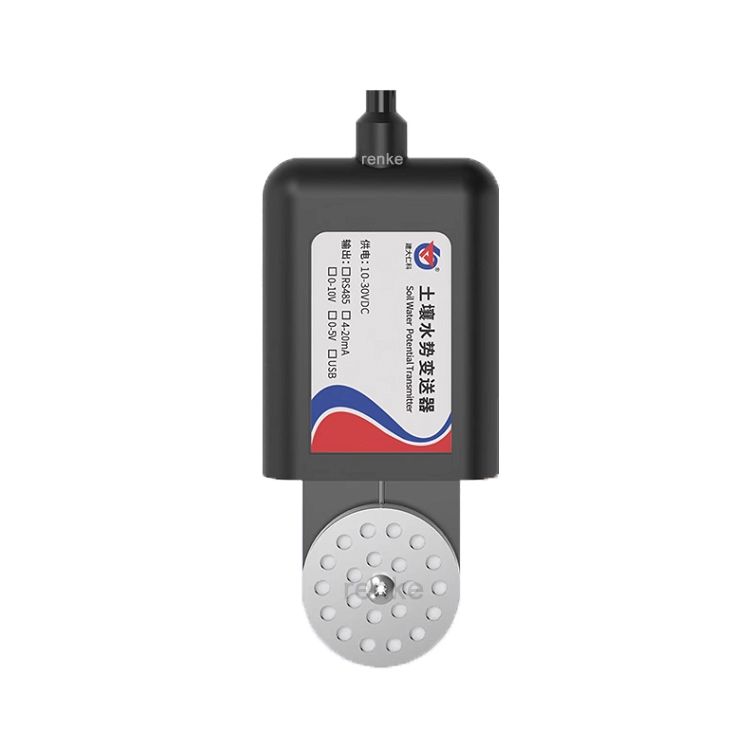
Soil water potential sensor is a precision instrument mainly used to measure the water potential energy in the soil and reflect the water content of the soil. The working principle of this sensor is based on the water potential theory in physics, that is, soil water potential is a manifestation of soil water energy, which determines the direction and speed of water movement in the soil. The main function of the soil water potential sensor is to monitor the soil moisture status in real time, provide a scientific basis for agricultural production, help to achieve precise irrigation, improve agricultural output and water resource utilization efficiency. The following are some specific applications of soil water potential sensors:
Agricultural production
Soil water potential sensors play an important role in agricultural production. By real-time monitoring of soil moisture status, farmers can adjust irrigation strategies according to changes in soil water potential, avoid water waste, and increase crop yields.
Forestry and horticulture
In forestry, soil water potential sensors can help monitor the growth of trees, adjust irrigation and fertilization plans in time, and improve tree survival rate and growth rate. In the field of horticulture, soil water potential sensors can be used for water management of crops such as flowers and vegetables to ensure that crops grow under optimal water conditions.
Greenhouse environment
In a greenhouse, soil water potential sensors can monitor soil moisture conditions in real time, helping managers optimize irrigation plans and maintain appropriate soil moisture, thereby creating an environment conducive to crop growth.
Scientific research
Soil water potential sensors are widely used in the field of scientific research, especially in soil hydrology and plant physiology research. By measuring soil water potential, researchers can understand the dynamic changes in soil moisture and study the transmission process of water in the soil-plant-atmosphere system.
Arid areas and special environments
Soil water potential sensors are also suitable for soil water research in special environments such as arid areas, frozen soil, and roadbed. These sensors are able to work in extreme environments and provide scientists with valuable data to help them understand the behavior of soil moisture in these special environments.
In summary, soil water potential sensors are widely used in agriculture, forestry, horticulture, greenhouse environments, scientific research, and soil water research in special environments. The use of these sensors not only improves resource utilization efficiency, but also helps to increase crop yield and quality, which is of great significance to modern agricultural production and environmental protection.


